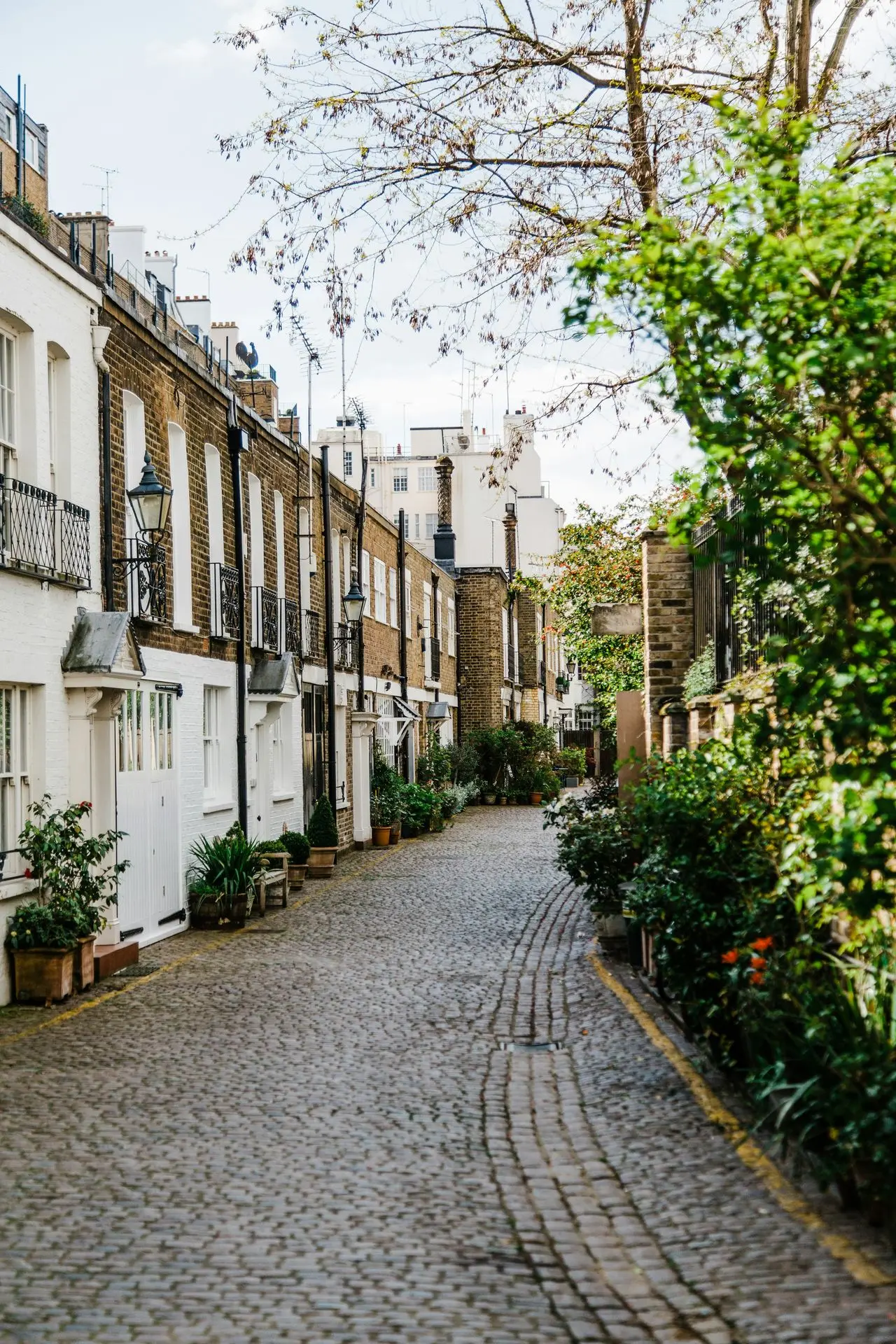
The street is the oldest architecture we have.
It predates the house in any organized sense. Before people had permanent dwellings, they had paths: routes between water, food, and shelter, worn into the ground by repetition, widened by use, defined by the obstacles they navigated around. The city, in every culture and climate in which it has emerged independently, is essentially a system of streets with buildings attached. Get the streets right and the buildings almost take care of themselves. Get them wrong, and no amount of architectural ambition will save the city from becoming unlivable.
This is not a fashionable observation in an era that celebrates individual buildings. The architectural press covers objects: the new museum, the landmark tower, the pavilion designed for a festival and dismantled after six months. These objects are photographed, awarded prizes, and entered into the historical record as significant works. The streets they sit on are background. They are the grey matter between the coloured pins on the architectural map.
But anyone who has spent time in a great city knows that the street is not background. The Calle Larga XXII Marzo in Venice, the Rue de Rivoli in Paris, the Graben in Vienna: these are not merely routes between destinations. They are destinations in themselves. They have a quality of spatial definition, a relationship between the height of the buildings on either side and the width of the space between them, that produces an experience of enclosure and continuity that no single building can replicate. You do not go to Venice to look at individual buildings. You go to Venice to walk its streets, which are the greatest urban achievement in the history of Western architecture.
The metric urban designers use to describe the relationship between building height and street width is the H-to-W ratio, and it turns out to be one of the most reliable predictors of whether a street feels good to be in. Ratios between one to one and one to two, where the buildings are between half the width of the street and equal to it in height, tend to produce spaces that feel comfortable: enclosed enough to have a sense of place, open enough not to feel oppressive. The streets of the great European cities cluster around these ratios with remarkable consistency, not because their builders knew the formula but because they were building to a human scale that they understood intuitively.
The twentieth century's great urban mistake was to abandon this intuition in favor of a theory. Le Corbusier's Plan Voisin of 1925, which proposed demolishing the historic center of Paris north of the Seine and replacing it with a grid of cruciform towers set in parkland, was never built. But it was enormously influential. The idea that towers in a park were a superior urban form to the traditional street, and that light, air, and greenery could substitute for the spatial enclosure that streets provide, shaped housing policy in most of the developed world for the better part of four decades.
The towers in parks that resulted from this theory were, as urban environments, almost universally unsuccessful. The parkland between the towers, which was supposed to be a democratic amenity available to all residents, turned out in practice to be nobody's territory and therefore everybody's problem. Without the natural surveillance provided by buildings that front directly onto public space, the parks became places that residents avoided rather than used. The towers themselves, disconnected from the street and from each other, produced communities that lacked a shared public space in which to constitute themselves as such.
Jane Jacobs understood this before almost anyone else in the English-speaking world. Her Death and Life of Great American Cities, published in 1961, is essentially a defense of the traditional street against the planning theories that were destroying it. Her arguments were empirical rather than aesthetic: she observed what actually happened in streets that worked and streets that did not, and she found that the decisive variable was not the quality of the individual buildings but the quality of the relationship between building and street. Buildings that fronted directly onto the pavement, with active uses at ground level, eyes on the street, produced safe and lively public spaces. Buildings set back from the pavement, behind car parks and security barriers, produced the opposite effect.
The recovery of the street as the primary unit of urban design has been one of the significant architectural and planning movements of the last thirty years. New Urbanism in America, the urban renaissance policies of British cities in the 1990s and 2000s, the ongoing transformation of European cities that had damaged themselves with postwar road building: all of these represent a return to the understanding that the street is not background but foreground, not infrastructure but architecture.
The best streets are not designed in any conventional sense. They accumulate. They are the product of many hands over many years, each addition responding to what is already there, the whole becoming more coherent with time rather than less. This is not an argument against design. It is an argument for a particular kind of humility in the face of complexity: the recognition that the city is a system too large and too intricate to be resolved by any single act of design, however ambitious.
Build a building. But first, understand the street it sits on. The street was there before the building, and if the building is gone in a hundred years, the street will likely still be there.
The street is the architecture that outlasts everything else.