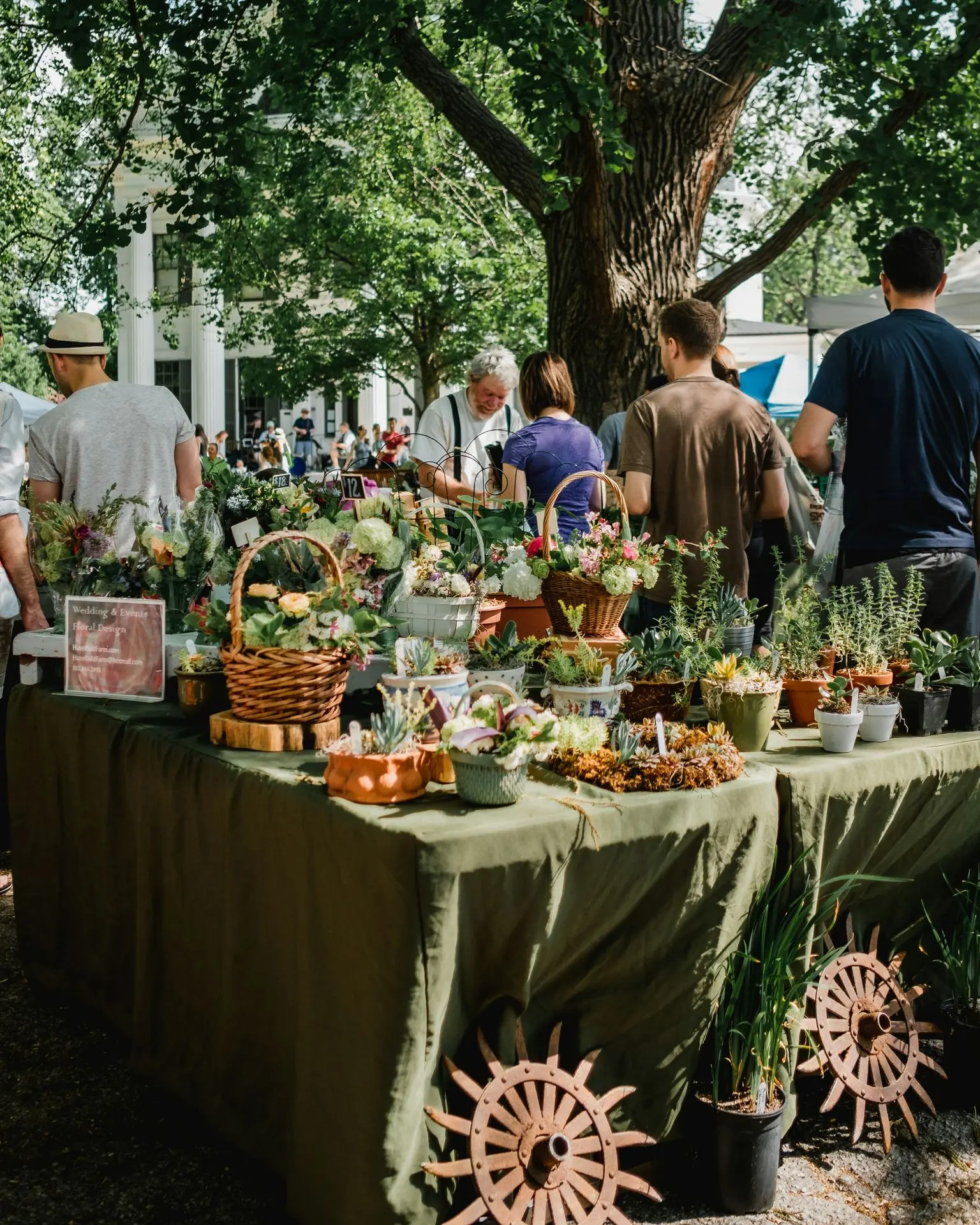
The market is where the city most fully becomes itself.
Not the supermarket, which is a machine for the efficient extraction of money, but the market in its older and more generous sense: the covered hall, the open square, the labyrinthine souk, the Victorian arcade, the weekly street market that takes over a neighborhood and turns it, for a few hours, into something more volatile and more interesting than it usually is. Markets are where cities generate their energy, where strangers interact across the transaction of buying and selling, where the diversity of a city's population becomes visible and functional rather than merely theoretical.
The oldest markets are also some of the oldest surviving urban spaces. The Grand Bazaar in Istanbul, which has been in continuous operation since 1461, spans 61 streets and contains over 4,000 shops. It is not a building in any conventional sense: it is a neighborhood, an urban quarter, a city within a city, with its own logic of organization that has evolved over five centuries in response to the needs of the traders and the customers who use it. The spatial structure of the bazaar, its covered streets, hans, and bedestens, is not the product of a single design decision. It is the accumulated result of many small decisions made over many years by many different people, each responding to what was already there.
This quality of accumulated intelligence, of spatial organization that has been tested and refined by generations of use, is one of the things that makes the traditional market so difficult to replicate through design. Architects and developers have repeatedly tried to recreate the vitality of a traditional market by designing a new one, and the results are almost always disappointing. The planned market feels planned. The spontaneity that makes traditional markets alive is, paradoxically, the product of long-established order: the same traders in the same pitches over many years, the same routes through the space worn into the ground by generations of feet, the same seasonal rhythms that the market community knows and responds to.
The Victorian covered market was the form this took in the industrial city, and the best examples are extraordinary buildings. Leeds Kirkgate Market, founded in 1822 and rebuilt in its current form in 1904, is a cathedral of commerce: iron and glass spanning a vast central hall that connects streets of stalls on multiple levels. The building is generous in every dimension, its height and volume giving it an airiness that the cramped streets outside lack, its ironwork columns and arches providing a structural elegance that makes the market feel like a public building rather than a purely commercial one.
The Mercado Central in Valencia, completed in 1928, carries this tradition into the early twentieth century with a structural ambition that even exceeds the Victorian examples. Its central dome of iron and glass rises over eight thousand square meters of market floor, the largest covered market in Europe at the time of its completion and still one of the most impressive. The dome leaks heat in summer and provides insufficient insulation in winter, which accurately describes the thermal performance of most iron-and-glass structures of its era. None of this matters. The building produces a quality of public space that the city would be impoverished without.
The contemporary food market, the kind that has colonized former industrial buildings in cities across the world in the last twenty years, is a different and more ambivalent phenomenon. Borough Market in London, Time Out Market in Lisbon, Chelsea Market in New York: these are spaces that have correctly understood that the combination of food and gathering has a social power that other retail formats lack. They are often beautifully designed, the industrial heritage thoughtfully retained, the mix of vendors carefully curated.
But they are also, very often, expensive in ways that traditional markets are not. The economics of high-end food markets, with their artisanal producers and premium pricing, select for a particular kind of customer and exclude a large portion of the city's population. This is not necessarily a design failure: it is an economic reality. But it means that the contemporary food market, for all its spatial quality, is not doing what the traditional market does. It is not a place where the whole city meets. It is a place where a particular part of the city meets, and congratulates itself on its taste.
The spaces where the whole city actually meets are increasingly hard to find. The supermarket has taken over most of food retail, the shopping center most of the rest, and neither of these spaces produces anything like the social complexity of the traditional market. What is lost is not merely a shopping format. It is a form of public life, of the accidental interaction between strangers that Jane Jacobs identified as the elementary particles from which urban vitality is made.
The market is one of the oldest civic institutions we have. It deserves to be thought of as civic infrastructure: as important to the life of a city as the library or the park or the square, and deserving of the same quality of architectural attention.
Where people gather to buy and sell, they also gather to be citizens. The two things have never been fully separable.