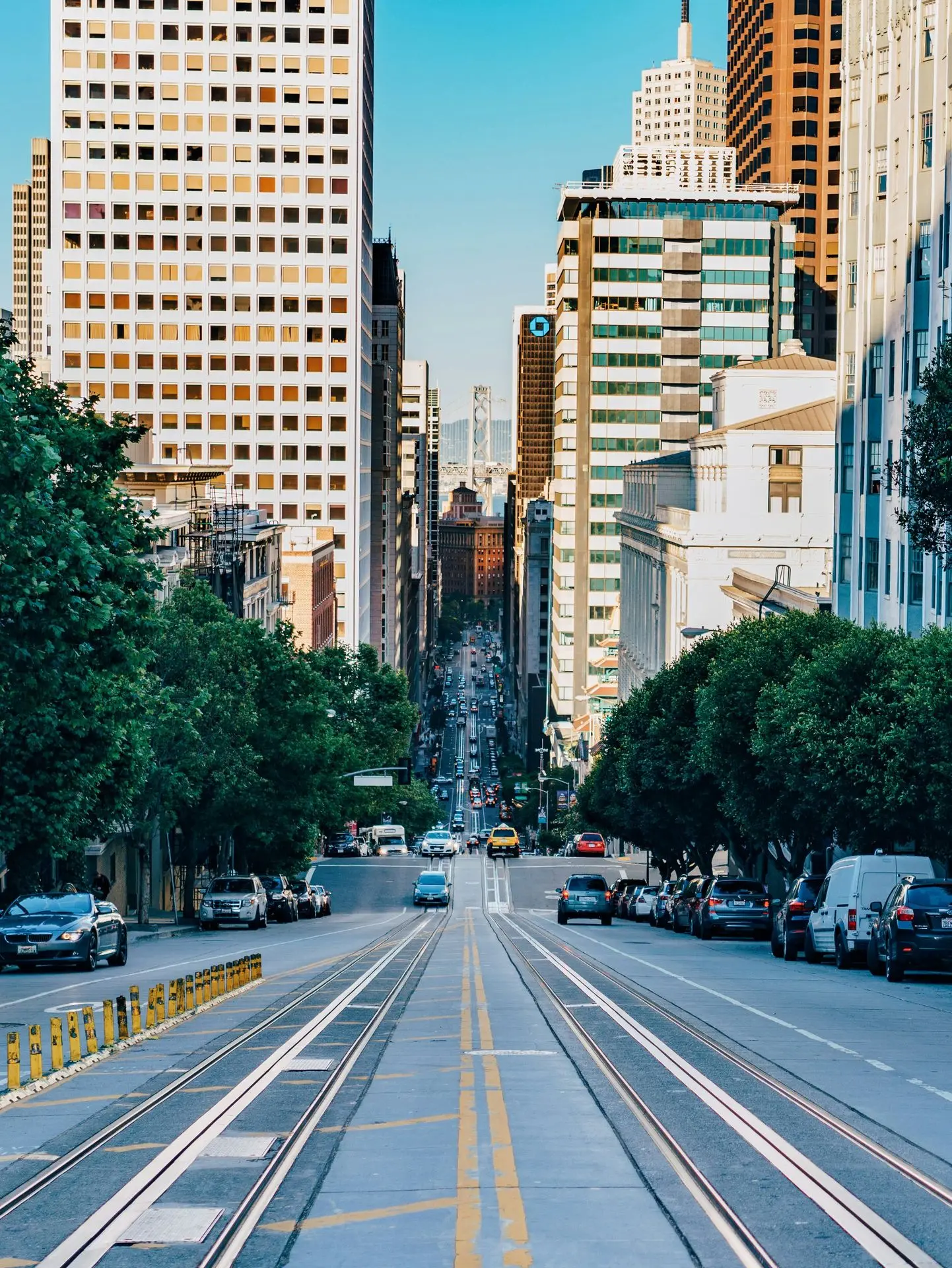
The car is the largest architectural intervention ever made in the city, and nobody voted for it.
Between roughly 1920 and 1980, most cities in the developed world were substantially reorganized to accommodate the automobile. Streets were widened, and pedestrians pushed to their edges. Urban motorways cut through existing neighborhoods. Car parks consumed land that had previously been used for housing, commerce, and public space. The distances between things were stretched to the point where walking between them became impractical, making the car more necessary and justifying further reorganization around it. The logic was circular and self-reinforcing, and by the time its consequences were fully visible, it had transformed the physical structure of cities in ways that will take generations to undo.
The transformation happened at different speeds in different places. American cities, particularly those that grew rapidly after the Second World War, were built almost entirely around the automobile from the start. Los Angeles is the canonical example, but the pattern is common across the sunbelt: Phoenix, Houston, Atlanta, Las Vegas. These cities have urban densities so low and distances between uses so great that they are functionally incomprehensible without a car. The proportion of land given over to roads and car parks in an American city can be as high as sixty or seventy percent of the total urban area.
European cities, which already had denser urban structures in place when the car arrived, were damaged less extensively but still substantially. The road-building programs of the postwar decades cut through historic neighborhoods in city after city. The Westway in London, the Route Nationale 7 through Paris, the autostrade that severed Italian historic centers from their riverfronts: these are wounds that the cities are still, decades later, trying to heal.
The case for reducing the role of the car in cities is now, in most serious planning contexts, accepted. The evidence that car-dominated cities produce worse outcomes, on measures from public health to economic productivity to social cohesion, has accumulated to the point where it is no longer seriously contested. The question is not whether to redesign cities around something other than the car, but how to do it without destroying the economic and social systems that have, over several generations, organized themselves around the car's availability.
Barcelona's superblocks are among the most significant current experiments in the urban deprioritization of the car. The scheme, begun in 2016 under the urban mobility plan of the Ada Colau administration, reorganizes the traffic grid of the Eixample district by grouping nine blocks into a superblock and restricting through traffic to the outer streets, leaving the interior streets as pedestrian and cycling space. The results have been documented in considerable detail: reductions in air pollution and noise, increases in street-level commercial activity, measurable improvements in mental health among residents. The street space reclaimed from traffic has been given over to public life.
Oslo removed all its city-center car parking between 2019 and 2024, replacing the space with cycle lanes, pavements, and public seating. The predicted economic catastrophe for city center businesses did not materialize. Foot traffic increased. The city center became more pleasant to be in, which made more people want to spend time there, which was good for the businesses that had feared the loss of parking.
Paris has been transforming its relationship with the car for more than two decades, under a series of mayors who have consistently prioritized cycling and walking infrastructure over road capacity. The city's cycling network has grown from a few isolated lanes to a system that makes most of the city accessible by bicycle without significant interaction with motor traffic. The banks of the Seine, which were motorways within living memory, are now parks.
What these interventions have in common is that they reverse the logic that produced car-dominated cities in the first place: they design for the pedestrian first, the cyclist second, and the driver last, which is the inverse of how most twentieth-century urban design operated. The results demonstrate, in city after city, that the space given to cars in the twentieth century was far more than was required for the city to function, and that the reclaimed space can be put to better civic use.
The city after the car will not look like the city before it. The pre-car city was built at densities that the car made unnecessary, with a fine grain of uses that the car made inefficient. The post-car city will be something new: denser than the car-dominated city, more mixed in its uses, more legible to the pedestrian, and organized around a different understanding of how to move through urban space.
It will also, if the current experiments are any guide, be considerably more pleasant to live in.
The car remade the city in its own image. It is now the city's turn.