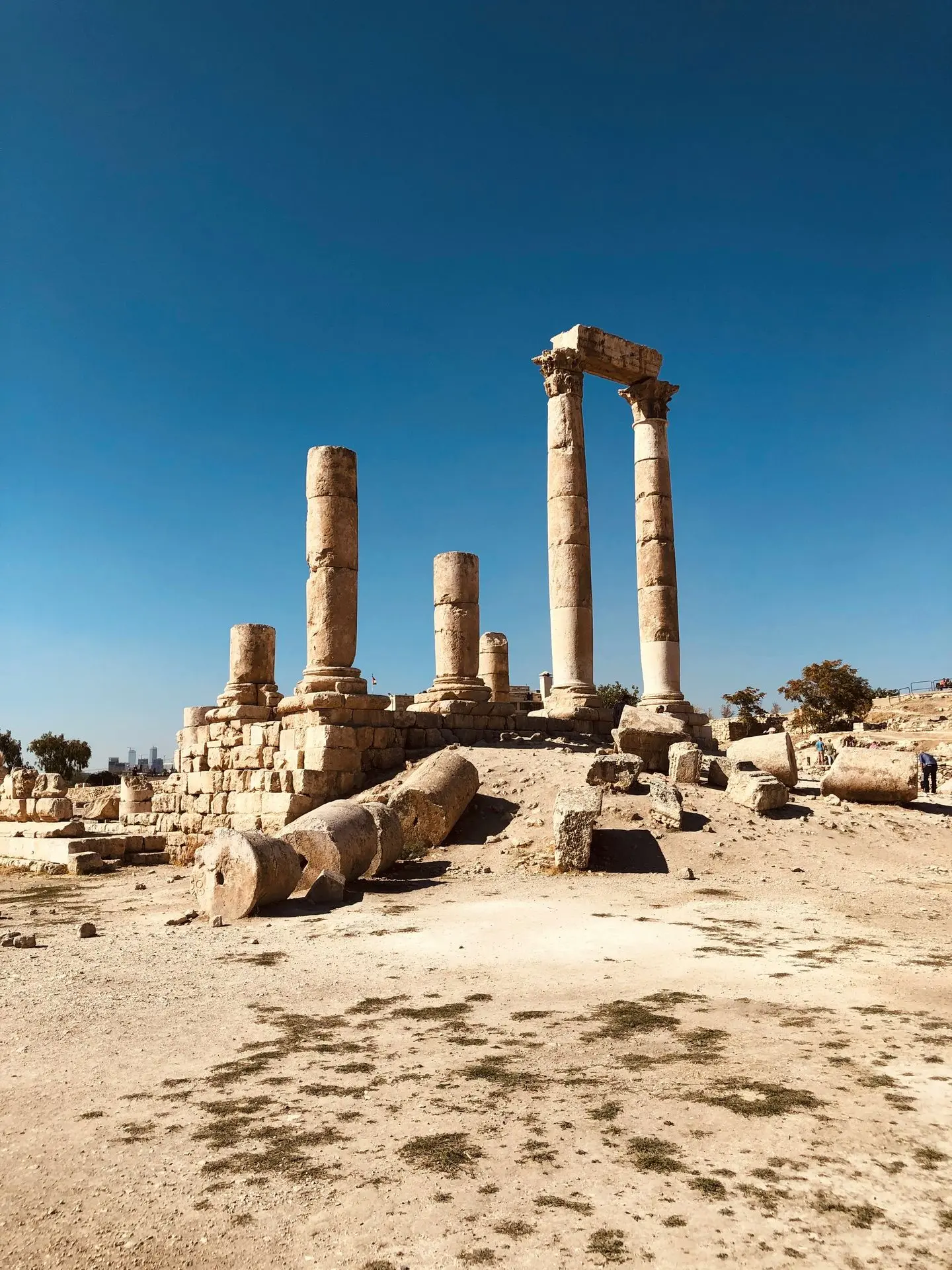
A ruin is a building that has begun to tell the truth.
The complete building conceals its structure behind finishes, its services behind walls, its age behind maintenance. It presents a composed face to the world, a face that has been designed, managed, and kept in a state of controlled appearance. The ruin has lost this control. Time has stripped the cladding, leaving the structure bare. Rain has worked into the mortar and the stone has moved. Vegetation has taken hold in the cracks and grown into something the original architect did not specify. The building has, in the process, become something more complex and more interesting than it was.
The Romantic painters of the eighteenth century understood this. They painted ruins with an attention and a reverence that they rarely gave to intact buildings, because they understood that a ruin was not a failed building but a different kind of building: one that had been improved by time, that had accumulated a quality of significance that no amount of design could produce in a new structure. The Colosseum, which is always represented in Romantic painting in its ruined state rather than its imagined completeness, achieves an emotional power in ruin that the original building, complete with its marble cladding, canopy of awnings, and roaring crowds, probably never had.
John Ruskin, the nineteenth-century critic who did more than anyone else to establish the intellectual framework for the appreciation of historic buildings, argued that the aged surface of a building, its patina of weather and time, was not a defect to be corrected but the building's most precious quality. He called this quality the golden stain of time, and he argued that it could not be reproduced by any artificial means: that the surface of a building that had weathered for four centuries was categorically different in kind from the surface of a new building, however carefully it had been crafted. This is why, Ruskin argued, restoration was a form of destruction: to clean a medieval surface and replace it with new material was to destroy the very quality that made it worth preserving.
This argument sits in permanent tension with the architect's instinct, which is to intervene: to repair, to restore, to return the building to some previous state of completeness. The tension has never been resolved, and it probably should not be. The ruin that is left entirely alone will eventually disappear. The ruin that is over-restored loses the quality that makes it a ruin. The productive middle ground, which the best conservation practice occupies, involves a set of judgments about how much intervention is necessary to prevent further loss, and how much restraint is required to preserve the qualities that time has produced.
The archaeological sites of the ancient world present this tension in its most acute form. At Pompeii, the ongoing excavation and presentation of a city frozen at the moment of its destruction in 79 AD has involved, over two centuries of work, a series of decisions about what to preserve, what to reconstruct, and what to leave as found. The result is a site of extraordinary complexity: some areas meticulously conserved, others dramatically deteriorated, some houses reconstructed to give visitors a sense of what they once looked like, others left as bare walls open to the sky. The whole is more interesting than any single approach would have been.
In Japan, the Shinto shrine complex at Ise takes an entirely different approach to the relationship between buildings and time. The shrine, one of the most sacred sites in Japan, is completely rebuilt every twenty years on an adjacent site, using the same materials, tools, and construction techniques that have been used for at least fourteen centuries. The timber of the demolished shrine is redistributed to other shrines across Japan. The new shrine is structurally identical to the old one. There is no ruin. There is only the continuous renewal of a form that exists in time rather than against it.
The Ise solution is, in one sense, the opposite of Ruskin's golden stain: it explicitly refuses the accumulation of age in favor of perpetual renewal. And yet it produces a relationship with time that is, in its own way, as profound as the ruin. The shrine at Ise is two thousand years old and also brand new. Its age is carried not in its fabric but in its form, in the knowledge of how to build it, in the community of craftspeople who maintain that knowledge across generations.
Both approaches, the ruin embraced and the form renewed, are responses to the same question: what is the relationship between architecture and time? Neither the ruin nor the rebuilt shrine treats time as the enemy of architecture. Both treat it as one of the materials of architecture.
The building that knows it will not last forever, and is made with that knowledge, has access to a quality of honesty that the building which pretends to permanence can never achieve.