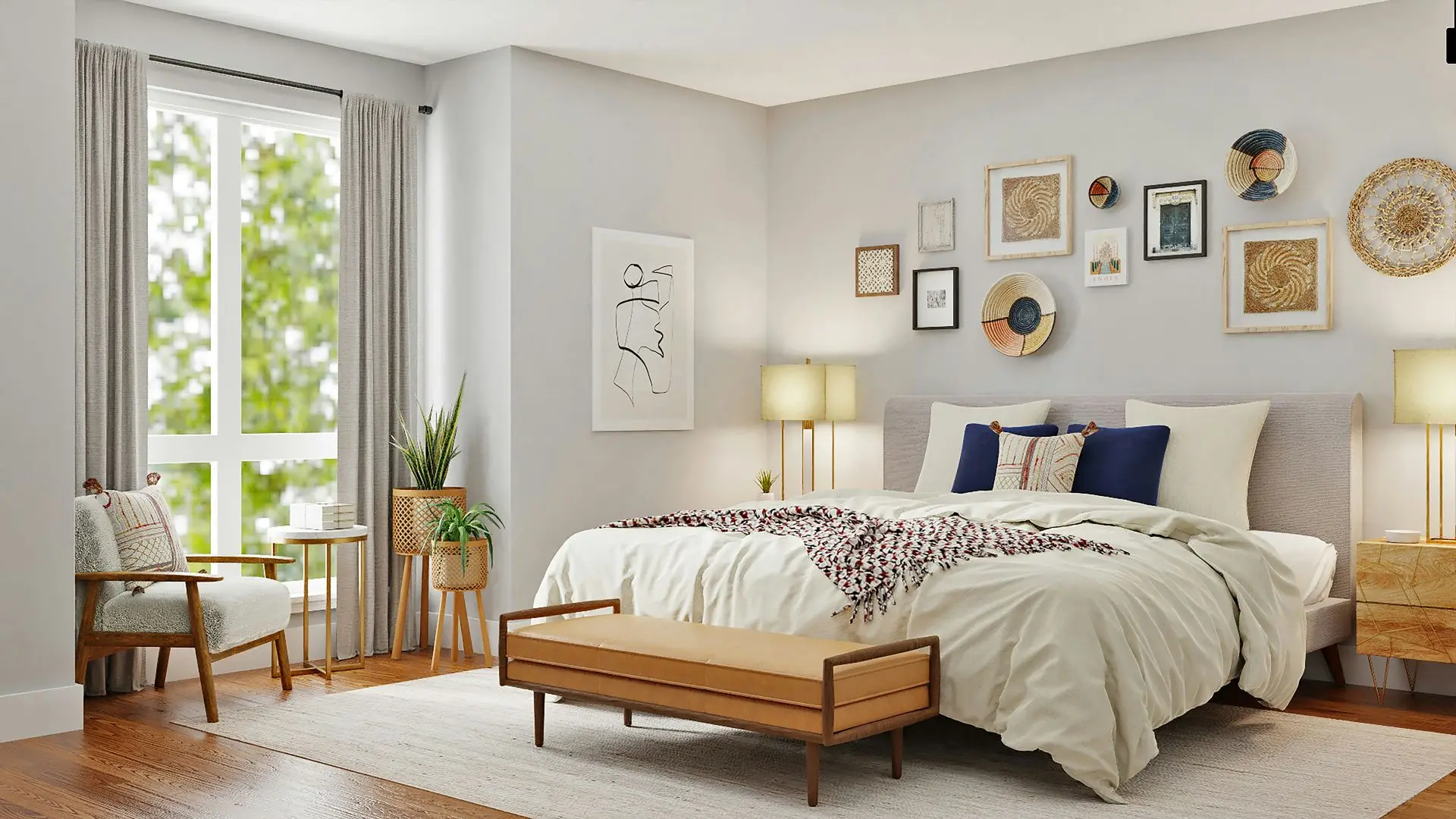
The bedroom is the most private room in the house, and the one that receives the least architectural attention.
This is not an accident. Architecture, as a discipline and as a cultural practice, has always been more interested in the public than the private: in the facade rather than the interior, in the room that receives guests rather than the room where the owner sleeps. The bedroom is the room that the servant prepared, and the architect rarely thought about, the room that disappears from the record because it was considered too intimate, too personal, too removed from the domain of public significance where architecture claimed its cultural territory.
And yet the bedroom is the room in which a person spends a third of their life. It is the room in which they are most completely themselves: vulnerable, unconscious, stripped of the social performance that public life requires. What a bedroom does to its occupant, how well it supports sleep, how it feels to wake in it, whether it provides the sensory conditions that a resting body needs, is consequential in the most direct possible way. The quality of sleep affects every other quality of life. The room in which sleep happens is therefore not a residual space. It is one of the most important spaces architecture can make.
The conditions required for good sleep are now well understood. Darkness matters: the human body's production of melatonin, the hormone that regulates sleep, is suppressed by light exposure, including the blue-wavelength light emitted by screens and by many artificial light sources. A bedroom that cannot be fully darkened will impair sleep quality in measurable ways. Temperature matters: the body's core temperature drops during sleep, and a room that is too warm will prevent the temperature drop required for deep sleep. Acoustic isolation matters: intermittent noise, even at levels below conscious awareness, disrupts sleep architecture and reduces the proportion of time spent in restorative deep sleep.
These are environmental requirements that architecture can address, but rarely does as a primary design consideration. The proportion of new bedrooms in residential developments designed with blackout as a primary requirement, rather than as an afterthought accommodated by a curtain rail, is small. The acoustic performance of party walls between bedrooms in apartment buildings, while regulated by minimum standards in most jurisdictions, is rarely designed for quality sleep, but rather for legal compliance.
The cultural history of the bedroom reveals how differently different eras and cultures have understood this space. The medieval great hall, in which an entire household slept together around a central fire, made no distinction between sleeping and living. The gradual privatization of sleep, which occurred over several centuries in Europe as wealth increased and architectural planning became more sophisticated, produced the separate bedroom as a marker of social status: only the wealthy could afford to sleep separately from their servants.
The Japanese approach to sleeping is architecturally distinct. The futon, laid on the tatami floor and stored in the day, means that the sleeping space is not permanently dedicated to sleep: the room is used for multiple purposes, and the sleeping configuration is assembled and disassembled as needed. This spatial flexibility, which is partly a response to the limited floor areas of Japanese urban housing, produces a different relationship between sleeping and waking space. The bedroom, in the Western sense, does not exist: there is only a room that becomes a bedroom at night.
The hotel bedroom is, in some ways, the most studied version of the type: the room that must be made comfortable for a stranger, without the personal accumulation of objects and associations that makes a domestic bedroom familiar. The best hotel bedrooms are designed with attention to the specific requirements of the sleeping body: generous blackout, precise thermal control, acoustic isolation, and a bed positioned in relation to the room's other elements so that the first thing seen on waking is something considered rather than arbitrary.
The domestic bedroom is almost never designed with this attention. It is typically the room that receives whatever floor area is left after the other rooms have been allocated, positioned wherever the plan requires rather than where sleeping orientation is best, and sized to accommodate a standard bed and a wardrobe with as little additional space as possible.
To design a bedroom well is to take seriously the quality of one of the most intimate and necessary experiences of a human life. Architecture that does this is rarer than it should be.
The room where you sleep determines the quality of everything else. It deserves to be made with care.