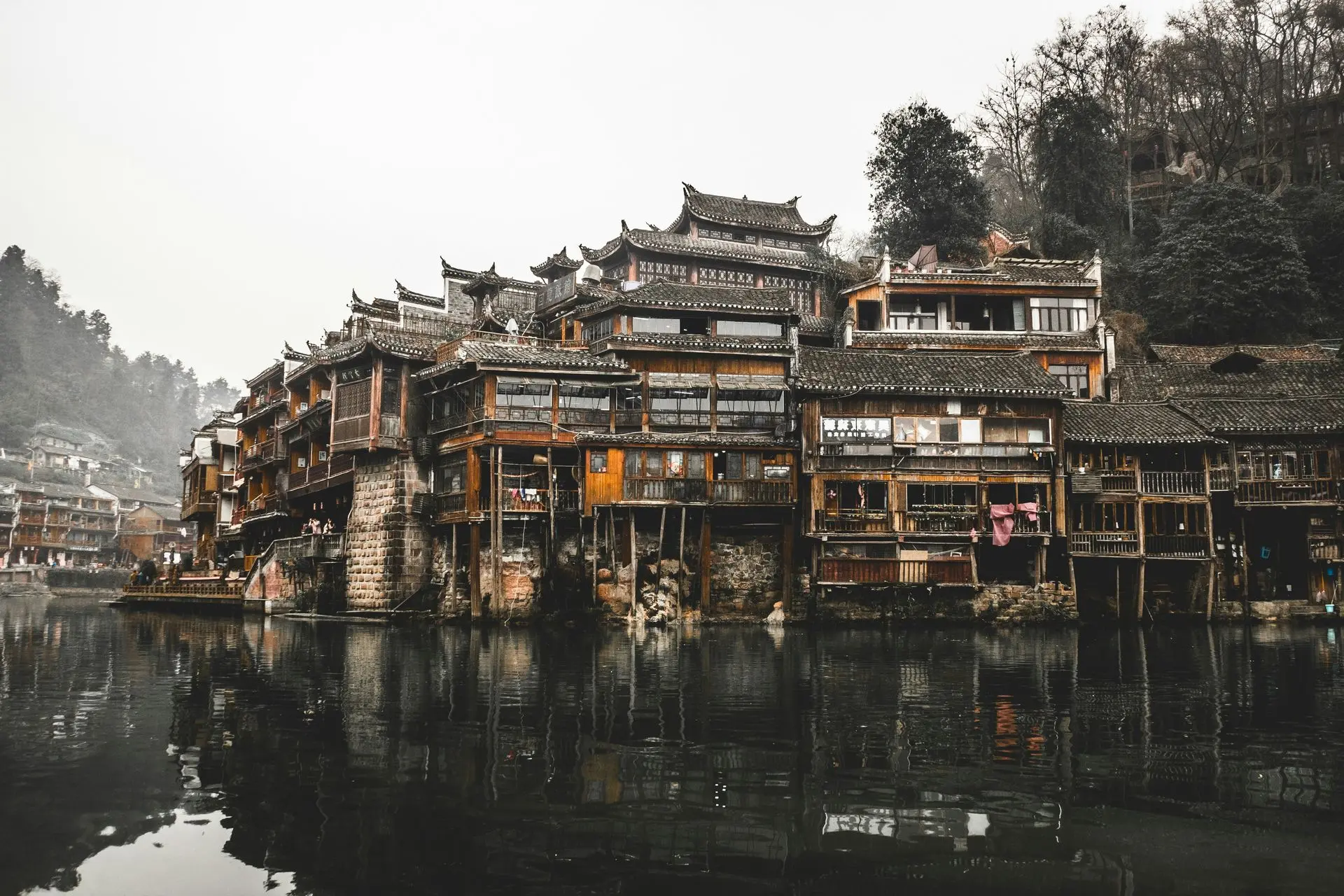
Most buildings are not designed to last.
This is not a recent development. Most buildings in most periods have been constructed to a standard adequate for their immediate purpose, using materials and techniques available at a reasonable cost, with a design life that matches the economic assumptions of their time. The vast majority of buildings ever constructed have been demolished, collapsed, or decayed within a few generations of their completion. The buildings that survive for centuries are, in the full sweep of architectural history, exceptional.
What makes a building last is partly material and partly cultural. The material conditions for longevity are reasonably well understood: robust structure, resistant to the forces that act on buildings over time; durable materials, capable of weathering the specific climate of the building's location without significant degradation; details that shed water, prevent moisture ingress, and allow the building to be maintained without major intervention. These conditions are necessary but not sufficient. A building also needs to be worth maintaining, which means it needs to be loved, or at least valued, by successive generations of people who have the power to decide whether it lives or dies.
The buildings that have lasted longest are almost always buildings of genuine quality. This is not a selection bias: it is a consequence of the relationship between quality and the cultural value that drives maintenance. Buildings that people love, that communities find worth preserving, that generate the kind of institutional or cultural attachment that motivates investment in their upkeep, tend to repay attention: they have qualities that become more apparent with familiarity, and they improve with age rather than deteriorating.
The medieval cathedral is the archetype of the long-lived building, and it is instructive to consider what made it last. The structural system, the Gothic skeleton of pointed arches, ribbed vaults, and flying buttresses, is one of the most efficient and durable ever devised: it concentrates loads precisely, allows easy inspection and repair of individual elements, and is capable of lasting for centuries without significant intervention if the basic maintenance of roofing and drainage is maintained. The materials, dressed stone and lead roofing, are extraordinarily durable in northern European climates. The building's cultural status as the most significant structure in its community also generated the institutional capacity to maintain it across centuries of changing ownership, governance, and religious practice.
The secular equivalents of the cathedral, the building types given the most resources and the most cultural significance in their eras, tend to share these qualities. The great country houses of England, built in brick and stone with lead or tile roofs, structural timber floors, and masonry walls of considerable thickness, are extraordinarily durable structures. Their survival is also a consequence of the institutional arrangements that surrounded them: the landed families and trusts and now the National Trust that have maintained them through changing economic conditions because their cultural significance justified the investment.
The contemporary building that aspires to longevity faces a different set of challenges. The lightweight, highly serviced building, with its curtain wall cladding, raised access floors, mechanical ventilation, and sophisticated building management systems, is one whose durability depends on the continued functioning of these systems. When the cladding fails, the mechanical plant reaches the end of its service life, or the building management system becomes obsolete, the required intervention is substantial. The building's longevity depends not on the durability of its structure but on the continuing economic case for renewing its systems.
Some architects take longevity seriously as a design consideration. Alvaro Siza's buildings are designed with attention to the durability of their materials and the quality of their details, giving them a robustness unusual in contemporary work. Peter Zumthor's buildings are built to a material standard that assumes they will be in use for a very long time. Both architects work slowly, take few commissions, and give each building the attention designing for longevity requires.
The economic pressure against longevity in contemporary practice is real. A building designed to last two hundred years costs more to construct than one designed to last fifty. In a development model that values return on investment over building lifetime, the additional upfront cost of longevity is difficult to justify. The costs of shorter building lifetimes, the embodied carbon of replacement construction, and the loss of urban fabric and institutional memory are costs borne by the public and by future generations rather than by the developer.
Building for centuries requires a different relationship with time than contemporary development practice embodies. It requires designing not for the client's immediate needs but for the full range of possible future uses. It requires materials and details selected for durability rather than initial cost. It requires a humility about the future that is unusual in a practice as confident in its own vision as architecture tends to be.
The building that lasts is the building that was worth lasting. That judgment is made not by the architect but by time, which is the most honest critic architecture has ever had.