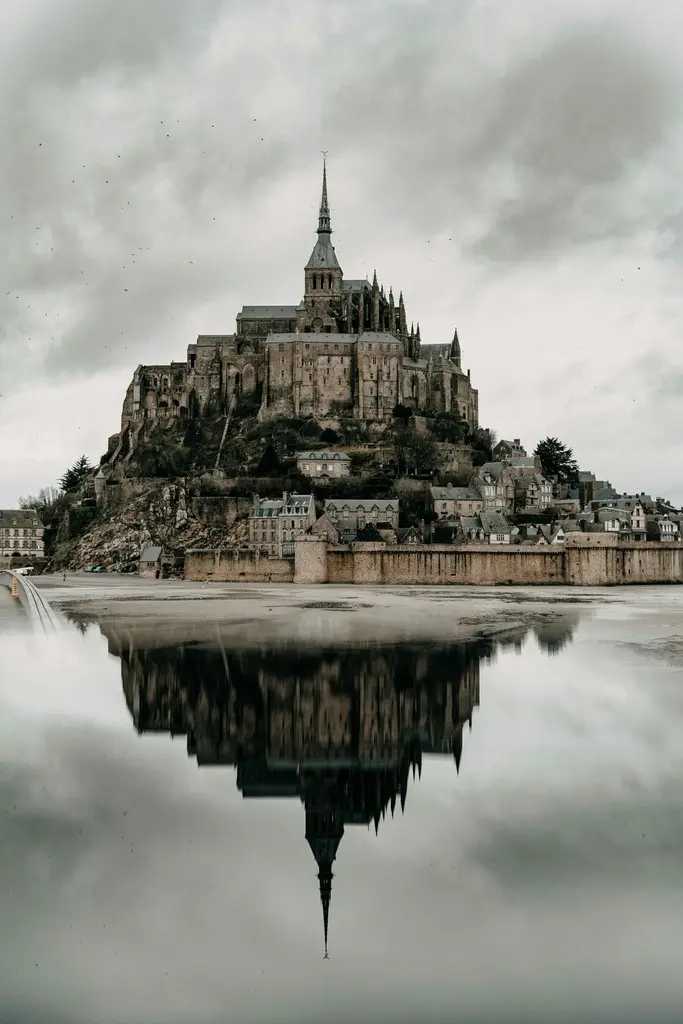
Most things we make disappear.
The email, the meeting, the presentation delivered and forgotten: these are the textures of a working life, and they vanish without ceremony. Even the larger things tend not to last. The company built and sold, the apartment renovated and resold, the garden that outlasts you by a season before someone else plants over it. We live in an age of exceptional productivity and very little permanence. We make more things than any previous generation and leave fewer of them behind.
Architecture is different. A building, genuinely built and genuinely cared for, is one of the few things a person can make that has a reasonable chance of outlasting them by centuries. Stone does not care about market cycles. Concrete does not depreciate in the way that financial assets do. A well-considered house, rooted in its landscape and honest about its materials, will still be standing when everyone who knew the person who commissioned it is also gone.
This is not a small thing. It is, in fact, one of the largest things available to a person who has built a life and wants to leave a mark on the world that cannot be undone by a software update or an economic correction.
The history of architecture is, in part, a history of patronage, of individuals who understood that commissioning a building was one of the most consequential decisions a person could make. The Medici did not build the Palazzo Medici Riccardi in Florence because they needed more rooms. They built it because a building of sufficient quality, placed in the right location, would still be carrying their name five hundred years later. They were right. The Pazzi Chapel, commissioned by Andrea de' Pazzi and designed by Brunelleschi, has outlasted every political reversal that destroyed the family that paid for it. The building survived. The legacy survived.
This is not a model available only to dynasties and dukes. It is available to anyone who is willing to take seriously the idea that what they commission will matter to people they will never meet. The private house, built with genuine ambition and genuine care, becomes part of the architectural record of its place. It is lived in, photographed, written about, and eventually listed or protected. It shapes the neighborhood around it. It demonstrates, in a way visible to everyone who passes by, what was considered worth building at a particular moment in time.
The architects whose work sits in the Planum archive are not offering drawings. They are offering the beginning of a legacy. The thinking has already been done: the years of education, the philosophical positions worked out through practice, the specific vision of what a building should be and do and feel like. The drawings are the result of all of that. What remains is the act of commission. The decision, which only a patron can make, that this vision deserves to exist in the world rather than on a hard drive.
There is a specific responsibility that comes with having the resources to build. The quality of the built environment, the texture of the cities and landscapes that everyone inhabits, is determined almost entirely by the decisions of the people who can afford to build things. When those decisions are made well, with genuine ambition and a willingness to commission architecture rather than just construction, the results accumulate over decades into places that feel worth inhabiting. When they are made badly, or not made at all, the results are equally cumulative and considerably harder to reverse.
The unbuilt work in this archive represents architecture at its most considered. These are projects that have not yet been compromised by the pressures of construction, nor ground down by value engineering, contractor negotiations, or planning revisions. They exist in their ideal state, as the architect intended them. Building one of them is not simply a property decision. It is an act of cultural stewardship, a choice to bring a fully formed piece of architectural thinking into the physical world.
Legacy is not built in retrospect. It is decided in the present, by people who are willing to take seriously the idea that what they build will matter to people they will never meet, in ways they cannot predict, for longer than they can easily imagine.
The standard is simple. Build something worth inheriting.