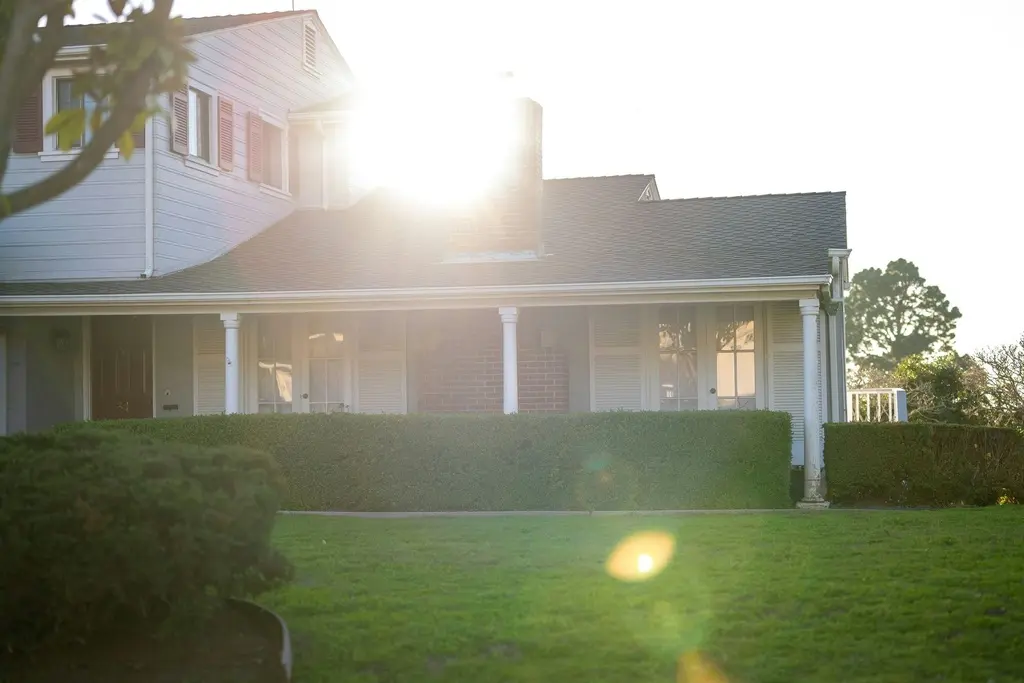
You cannot order light from a supplier. You cannot specify its tensile strength, its load-bearing capacity, or its behavior under sustained stress. It arrives at angles determined by geography and season, changes color throughout the day, and disappears entirely every 12 hours or so without notice. It is, by any rational account, a deeply unreliable building material.
And yet the greatest architects have always known that light is the most structural thing in a building. It is what determines whether a space feels generous or mean, sacred or institutional, alive or merely functional. You can build a beautiful room and destroy it with the wrong windows. You can take a room that is otherwise unremarkable and make it extraordinary by understanding exactly how the sun moves across it.
Louis Kahn, the Estonian-born American architect who produced his most significant work in the 1960s and 70s, understood this with a clarity that bordered on the theological. He spoke about light in a way that no other architect of his generation did, with a directness that could seem mystical until you stood inside one of his buildings and understood that he was simply describing what he had already built. His library at Phillips Exeter in New Hampshire, completed in 1972, is the clearest demonstration of this. The building is, at its structural core, a concrete frame holding a wooden interior. But the experience of it is entirely determined by light. Great circular openings cut into the concrete allow you to see the books from anywhere in the building. The light that filters through the skylights at the top of the central hall changes throughout the day, making every visit to the library a slightly different experience.
Kahn said that a room is not a room without natural light. It is a statement that sounds simple until you try to argue against it and find that you cannot.
Tadao Ando pushes this into an explicitly spiritual register. The Church of the Light in Osaka, completed in 1989, is one of the most reduced buildings in the contemporary canon. It is a concrete box. The walls are poured concrete, the floor is dark timber, and the pews are bare wood. There is almost nothing there. But at the altar wall, Ando cut a cross through the concrete, floor to ceiling and wall to wall, and at certain hours of the day, the light that pours through it fills the room so completely that the concrete seems to dissolve. The building ceases to be a material object and becomes a pure experience. The congregation sits in darkness, looking toward light. Ando has said that he wanted to make people feel the weight of silence in the presence of light. He succeeded.
What is remarkable about the Church of the Light is that it achieves this effect with virtually no architectural means. There is no stained glass, no carefully sculpted form, no complex geometry. There is only concrete, a cross-shaped opening, and the understanding of where the sun would be at the hours when the building would be most used.
Álvaro Siza, the Portuguese architect who has spent 60 years building in Porto, Galicia, and across the world, works with a different quality of light entirely. The north Atlantic light he grew up with is diffuse, grey, and unspectacular. It does not arrive at dramatic angles or produce strong shadows. It fills space evenly, without hierarchy. What Siza does is create rooms that capture and concentrate this light, making you aware of a quality of illumination you might otherwise ignore entirely. His buildings are full of windows placed at angles that seem slightly unexpected until you sit in the room and realize that the light is arriving exactly where you want it.
What these architects share is a refusal to treat light as decoration or amenity. In their buildings, windows are not features. They are structural decisions, as deliberate and as consequential as any column or beam. The question of where light enters a building, at what angle, at what time of day, bouncing off which surfaces before it reaches you, is not a secondary consideration. It is one of the primary acts of design.
This requires a different kind of thinking from most architectural decisions, because you are designing not with a fixed material but with something that changes by the hour. You have to think in time as well as space. You have to imagine the building across a day, across a year, across the full range of conditions it will face. The architect who understands light is working in four dimensions.
There is a practical argument for this too, beyond the poetic one. Buildings that are designed around natural light require less artificial illumination. They feel better when occupied, which affects how people work and live in them. They age better because natural light does not degrade as much as artificial light does. The investment in understanding light at the design stage pays dividends throughout the building's life.
But the more important argument is the simpler one. A building filled with natural light is a building that connects you to the outside world even when you are inside. It tells you the time of day. It tells you the season. It keeps you oriented in the world rather than sealed off from it. This is what architecture is fundamentally for.
Build with light, and the building will never feel empty. Even when no one is in it, the sun keeps moving through.