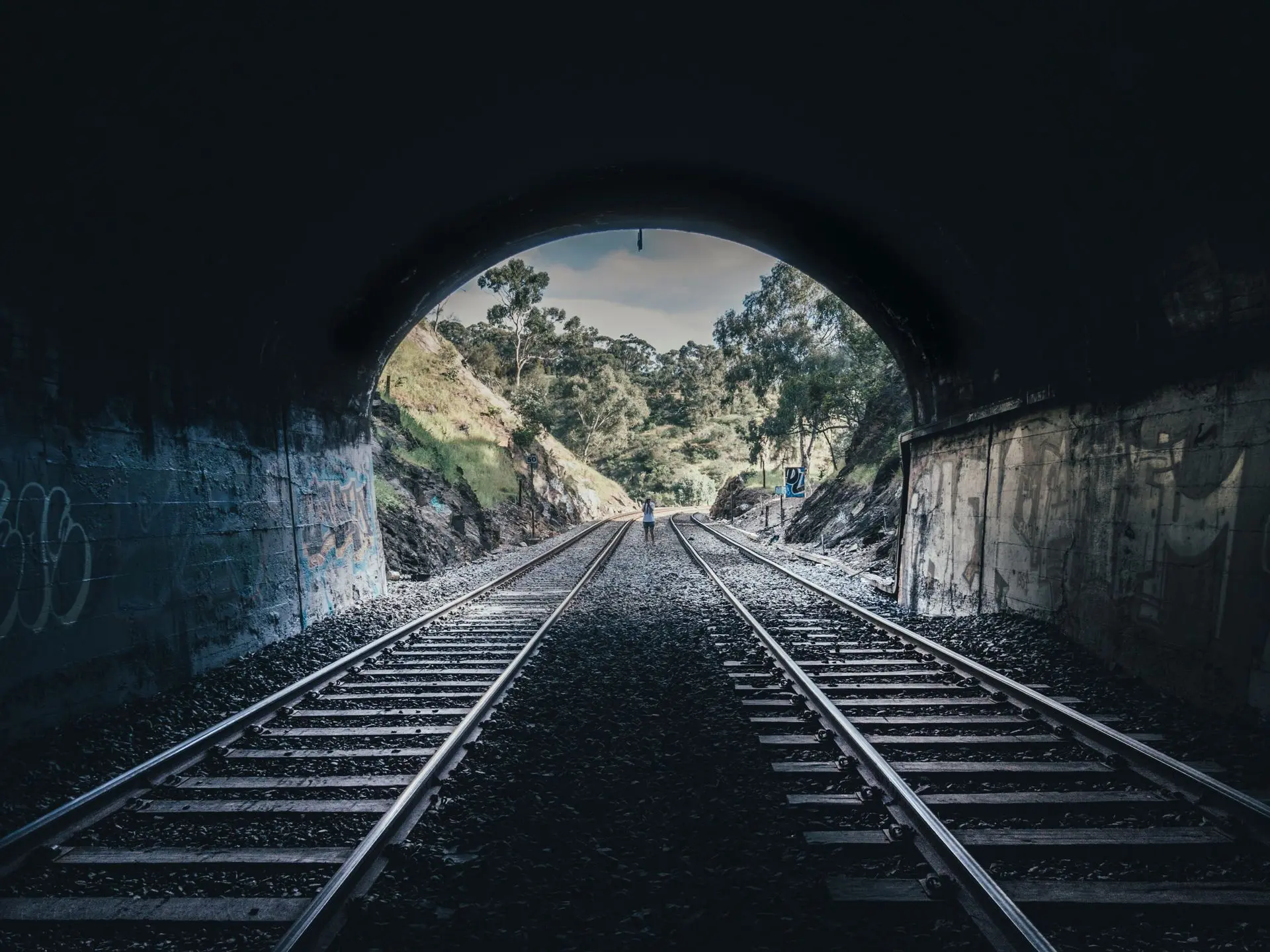
The city you can see is not the city that keeps you alive.
Below the streets, invisible to almost everyone who uses them, lies an infrastructure of extraordinary complexity and ambition: water mains and sewer pipes, gas lines and power cables, underground railways and pedestrian tunnels, fiber optic networks and ancient brick conduits. This buried world is the circulatory system of the city, and it is, in terms of the engineering intelligence it represents, as impressive as anything above ground. It is also almost entirely uncelebrated.
The great sewer systems of the nineteenth century were, at the time of their construction, regarded as among the greatest achievements of the age. Joseph Bazalgette's London sewer system, begun in 1858 following the Great Stink that had made the Thames impassable in summer, is a network of 1,800 kilometers of tunnels that still carries London's sewage today, a century and a half after it was built. Bazalgette designed it to handle the sewage of a city of several million people, and then, with an engineering foresight that is almost without parallel, doubled the diameter of every pipe. He anticipated that the city would grow. London now has a population of nine million. The system still works.
The engineering ambition of the Victorian sewer builders was matched by an architectural seriousness that has no equivalent in contemporary infrastructure. The Abbey Mills Pumping Station in east London, completed in 1868, is a Victorian Gothic building of considerable elaboration: brick and ironwork, towers and arched windows, a building that was given the architectural treatment of a church because its builders understood that it served a function as important to civic health as any church. It is a sewage pumping station, and it is beautiful.
The London Underground, the world's first underground railway, opened in 1863. Its early stations, designed by Charles Pearson and John Fowler, were cut-and-cover structures: the street above was excavated, a brick tunnel was constructed, and the street surface was reinstated above it. The engineering was straightforward by the standards of later tunneling, but the social ambition was not: this was the first time any city had attempted to move large numbers of people rapidly through tunnels beneath its streets, and the idea required a considerable act of imagination from the public that would use it.
Later stations on the Underground, particularly those designed by Leslie Green at the turn of the twentieth century and Charles Holden in the 1930s, were buildings of genuine architectural quality. Green's stations on the Piccadilly and Bakerloo lines, with their distinctive ox-blood red terracotta facades, are among the most recognizable buildings in London. Holden's stations on the Piccadilly line extension, particularly Arnos Grove and Southgate, are masterpieces of civic architecture: clean, geometric brick forms that provide a quality of public space, above and below ground, that puts most contemporary transport infrastructure to shame.
The water supply infrastructure has produced its own monuments. The aqueducts of ancient Rome, which carried fresh water to the city from sources in the hills, were engineering achievements of a scale not matched for nearly 15 centuries after the fall of Rome. The Aqua Claudia, begun under Caligula and completed under Claudius in 52 AD, carries water over 42 kilometers of countryside on a series of arched piers that remain standing in varying states of completeness. Like all great infrastructure, the aqueducts were built to last: not for the lifetime of a contract, or a government, or a generation, but for an indefinitely long time.
The contemporary city has largely lost this ambition. Modern infrastructure is designed to a service life of twenty-five to fifty years, after which it will be replaced. This is partly an economic decision and partly a failure of imagination: the assumption that future technology will make current infrastructure obsolete, that there is no point in building to last when what you build will need to be replaced anyway. The Victorian engineers who built to last were not wrong about the durability of their work. Bazalgette's sewers are still functioning. The Roman aqueducts are still standing. The Underground stations designed by Holden in the 1930s are still in daily use.
There is an argument, increasingly being made by engineers and infrastructure economists, that the emphasis on short-term cost optimization in infrastructure design has produced a false economy. Building to a fifty-year lifespan costs less upfront. It costs more over time because the infrastructure needs to be replaced and the city is disrupted by that replacement more often. Building to last is more expensive initially and cheaper over the long term.
It is also, though this is rarely the primary argument, more beautiful. The infrastructure designed to last was built with care. They were given materials and forms that would maintain their quality over time. It was treated as architecture rather than as engineering, which is to say it was treated as something that mattered.
The city below deserves the same attention as the one above it. The pipes, tunnels, and buried networks that keep urban life functioning are not background. They are the city's most fundamental architecture.
We have just collectively agreed to build them where no one can see them.