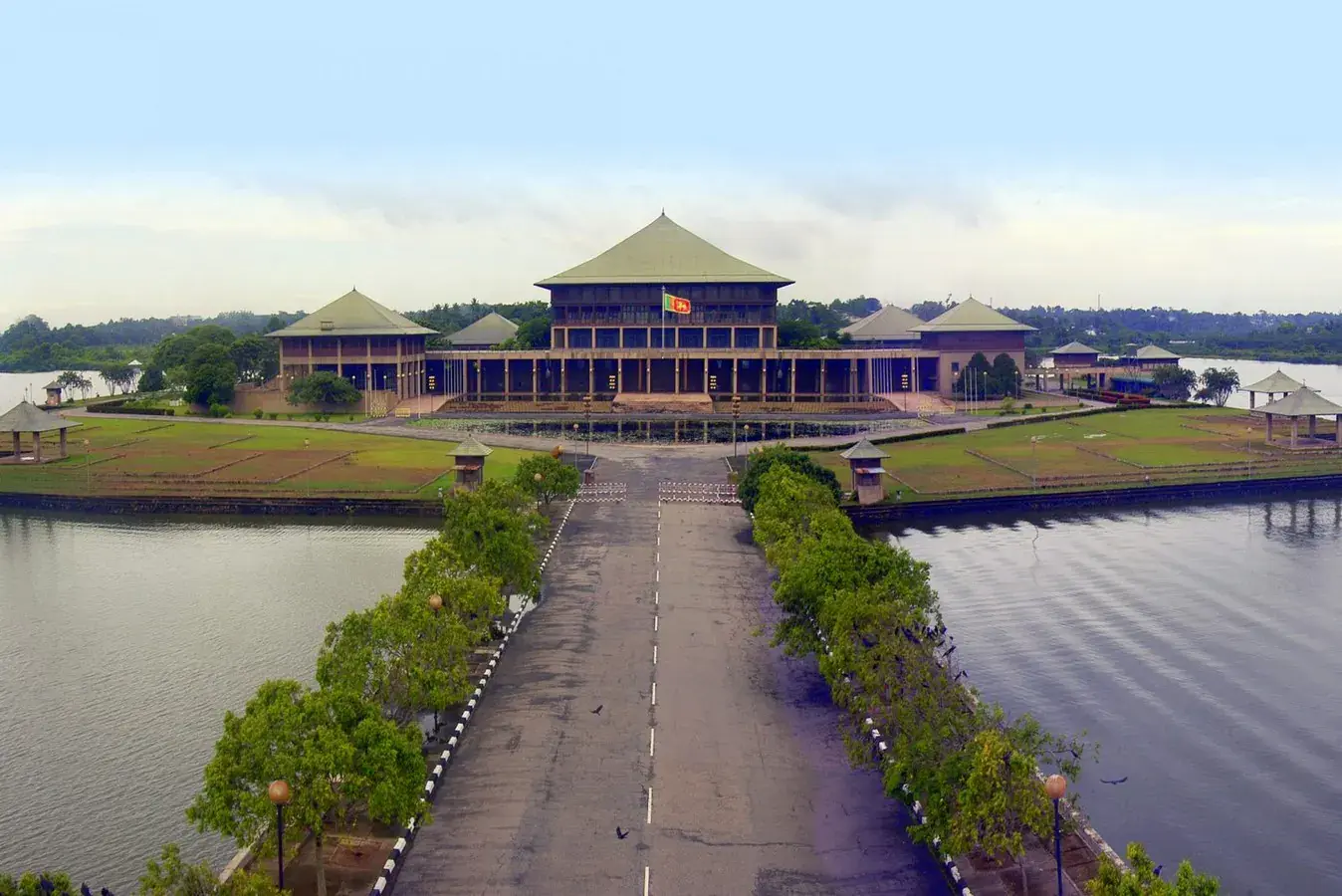
Geoffrey Bawa invented a way of building that had never existed before, and did it in a country that the international architecture world had not yet learned to look at.
Bawa was born in Colombo in 1919 to a wealthy Sri Lankan family of mixed Sinhalese and Burgher ancestry, educated in England, trained as a barrister, and turned to architecture in his thirties after buying a rubber estate in southern Sri Lanka and realizing that he needed to know how to build in order to make it what he wanted it to be. He enrolled at the Architectural Association in London in 1956, returned to Sri Lanka in 1957, and spent the next forty years producing a body of work that drew on the vernacular traditions of the Indian subcontinent and the formal language of European modernism, making something new from both.
The central question of Bawa's architecture is one that the International Style, in its mid-century confidence, had largely failed to ask: what does modernism look like when you build it in the tropics? The glass curtain wall that made sense in the thermal conditions of northern Europe or North America, where the primary challenge was retaining heat, becomes a disaster in the heat and humidity of Sri Lanka, where the primary challenge is releasing it. The enclosed, air-conditioned interior that seemed progressive in the 1950s and 60s was, in Bawa's context, a regression: a refusal of the climate rather than a negotiation with it.
His response was a series of architectural moves that look simple in retrospect but required considerable intelligence to arrive at. He opened buildings to the outside: not through glass walls, which admitted heat and glare, but through covered verandahs, deep overhangs, and carefully positioned openings that allowed air to move through while excluding direct sunlight. He used courtyards and water features to cool the air before it entered the building. He blurred the boundary between inside and outside so completely that in many of his buildings it is genuinely unclear where one ends and the other begins.
The Heritance Kandalama hotel, completed in 1994 in the dry zone of central Sri Lanka, is the most dramatic expression of this approach. The building sits on a cliff above a reservoir, embedded in a landscape of rock and jungle. It is long and low, with corridors that open onto both sides to the landscape, rooms that look directly into the jungle canopy, and common areas that are essentially roofed-over outdoor spaces. The building is of the landscape rather than in it: moss grows on its concrete, monkeys move through its corridors, the boundary between hotel and habitat is deliberately indistinct.
His Lunuganga estate in southern Sri Lanka, developed over fifty years from the rubber plantation he had originally bought in the 1940s, is his most personal work and perhaps his most important. It is a garden, primarily, but also a sequence of architectural spaces: terraces, pools, pavilions, and planting arranged to produce a series of views and experiences that unfold as you move through the landscape. Bawa worked on it continuously until his stroke in 1998 left him unable to continue, adding, removing, and adjusting with the patience of someone who understood that a garden, like a building, is never finished but only abandoned.
Bawa was not interested in being celebrated internationally. He worked in Sri Lanka for Sri Lankan clients on Sri Lankan buildings, and he was largely indifferent to the international architectural press that, by the 1980s and 90s, was beginning to pay attention to what he was doing. He declined most invitations to lecture abroad. He gave few interviews. He let the buildings speak, which they do with a clarity and confidence that needs no supplementary explanation.
His influence on the architecture of South and Southeast Asia has been enormous, though it is often felt more than acknowledged. The tropical modernism that characterizes the best contemporary architecture in Singapore, Malaysia, India, and Sri Lanka owes a significant debt to the principles Bawa developed: the integration of landscape and building, the negotiation with climate rather than its suppression, the use of local materials and craft traditions in combination with modern structural techniques.
He died in 2003, having spent his final years unable to work following his stroke. The Geoffrey Bawa Trust maintains his archives and his houses in Colombo and at Lunuganga. The buildings he left behind are among the most significant works of architecture produced in the second half of the twentieth century.
He asked a question that modernism had not thought to ask: what does the built world look like when it belongs to the place it is built in? The answer he gave was forty years of buildings that feel, each one of them, completely and specifically at home.